The burden that machines cannot carry
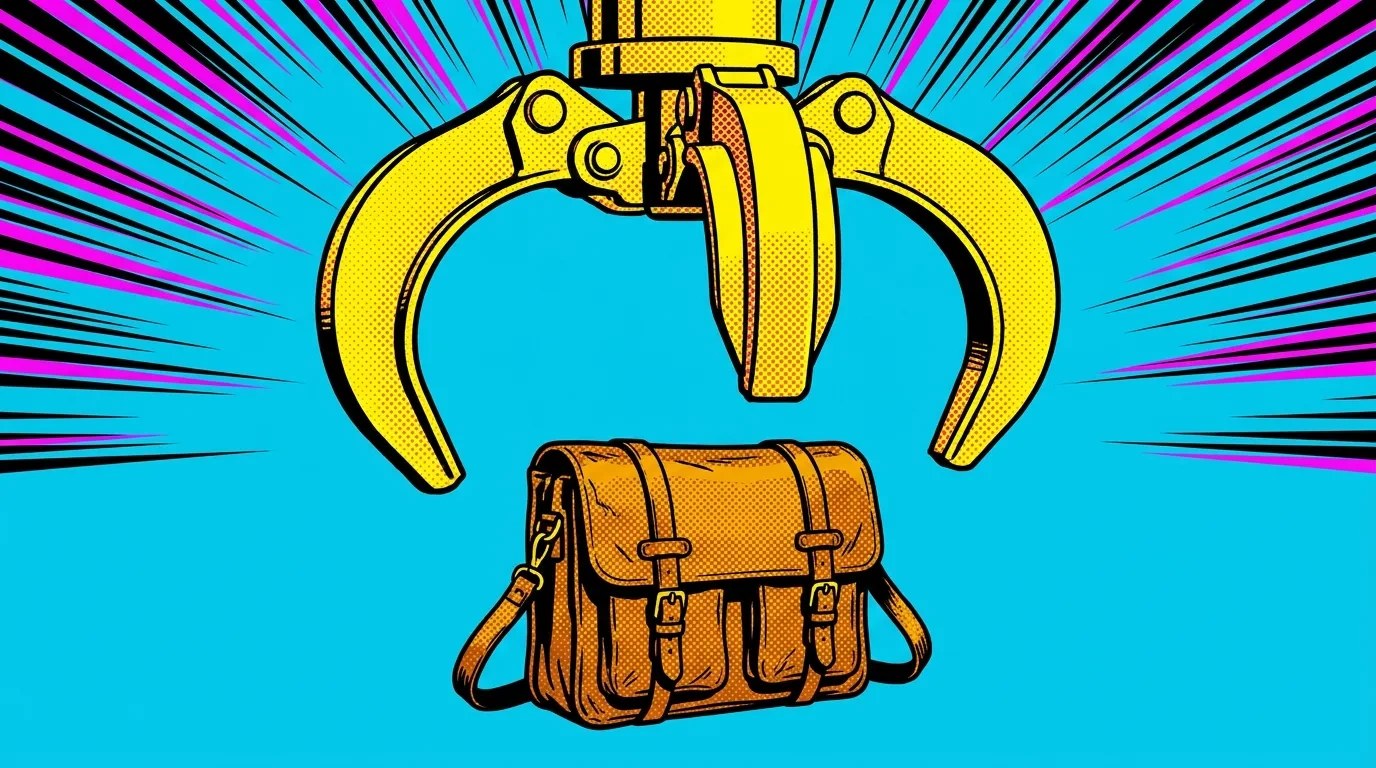
There is a weight that no machine, however powerful, can truly lift in our place. It is not a matter of physical effort or complex calculation. It is that particular burden born from the very fact of being conscious, responsible, and bound to other beings we cannot optimise.
Today’s technologies promise, in ever more refined ways, to relieve us of precisely this. They can decide in our place, foresee the consequences better than we do, simulate understanding, produce words of comfort, suggest choices. The offer is clear: you no longer have to carry the weight of judgement, of relationship, of responsibility on your own. Something faster, better informed and tireless can do it for you.
The seduction of this promise lies in the fact that it is not entirely false. Many of the things that weigh on us most — the repetition of trivial decisions, information overload, the management of details — can indeed be delegated with benefit. The problem arises when we begin to extend that delegation to the dimensions of existence that are not simple workloads, but forms through which we become what we are.
There is a profound difference between simulating the bearing of a weight and actually bearing it. A machine can generate an empathic response, calibrated to tone and context, without feeling anything of what that response pretends to share. It can assess a moral situation with great statistical accuracy without that assessment costing it anything, without it being marked by it, without it carrying the consequences in its own existence. It can accompany a person through a moment of suffering without being in the least exposed to that suffering.
This difference is not only philosophical. It has concrete consequences for the kind of beings we become when we grow used to these simulations. When we delegate the weight of judgement, we exercise the capacity to judge less and less. When we delegate the weight of relationship, we grow used to forms of connection that demand no real exposure from us. When we delegate the weight of responsibility, our conscience atrophies not because it turns bad, but because it stops being trained to carry.
The most dangerous illusion is not believing that machines will become like us. It is believing that we can become lighter without losing something essential. The lightness technology offers us is often a parasitic lightness: it frees us from the weight only to the extent that it transfers the cost of carrying it elsewhere. And that “elsewhere” almost always ends up being someone else, or a part of ourselves that we stop exercising.
What machines cannot do is not “be intelligent”. They can surpass human intelligence in a great many specific tasks. What they cannot do is inhabit the weight of a decision knowing that decision will change them, mark them, make them responsible in a way that cannot be undone by a reset or an update. They cannot know, from the inside, what it means for a choice to have a cost that cannot simply be optimised.
In this sense, the real risk of our age is not that artificial intelligence becomes too powerful. It is that we become progressively incapable of recognising and accepting the kind of weight that no artificial intelligence will ever be able to carry in our place. Because that weight is not a flaw in the system. It is the form through which consciousness stays alive.
There is a form of human greatness that does not consist in eliminating the burden, but in remaining capable of carrying it without being destroyed by it. This capacity does not develop by delegating it. It develops by exercising it, even when it would be more comfortable — or more efficient — to hand it over. Every time we choose not to delegate what could be delegated, we are in fact protecting something that machines, by their nature, are unable to guard: the fact that certain things cost us, and that this very cost keeps us bound to reality in a way no simulation can replicate.
The problem is not the machine. The problem is what we become when we too easily accept to be relieved of what, in order to be human, we should have gone on carrying.
Continue reading