VVV between buybacks and DIEM: where the value really ends up
The debate around VVV centres on an awkward question: how much value reaches the token and how much stays with the equity.
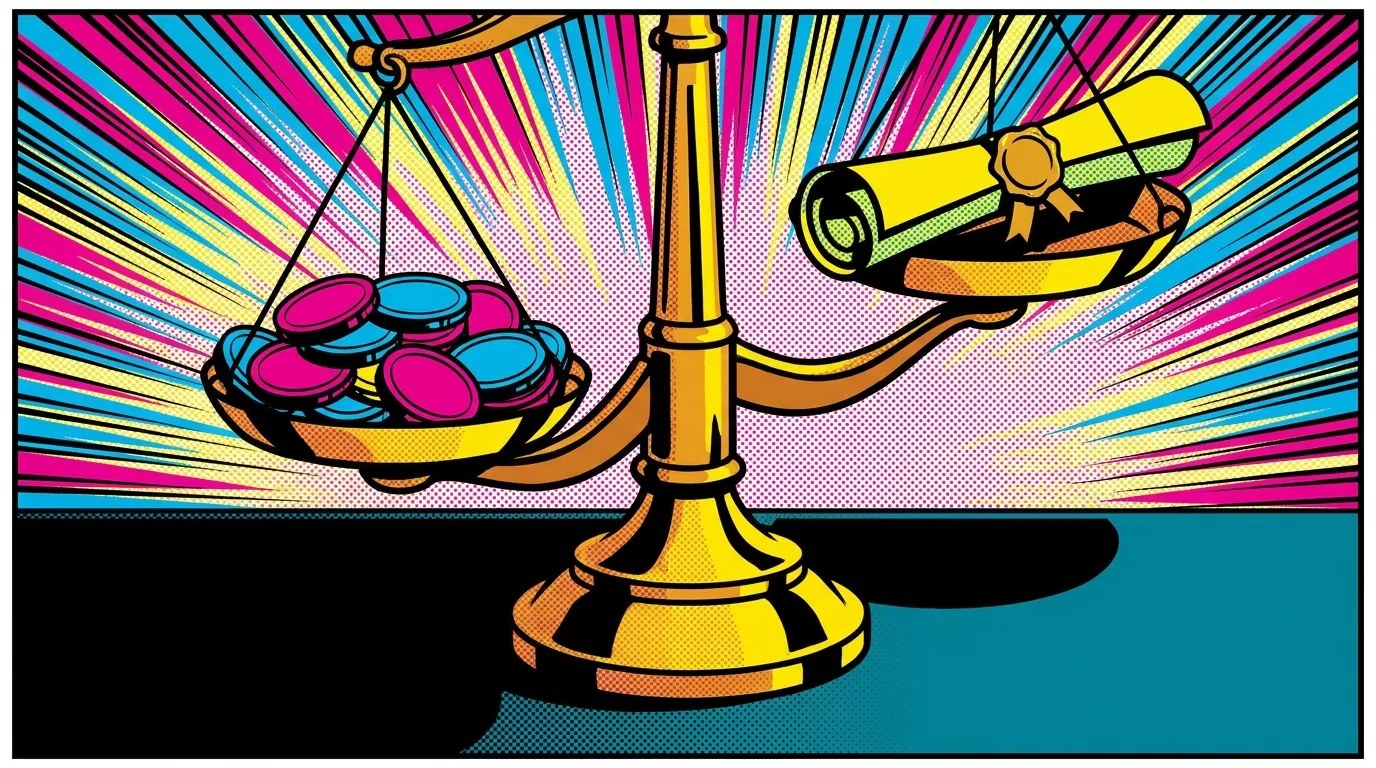
In today’s scanning window the debate around Venice.ai centres on a simple and awkward question: how much of the product’s value reaches the VVV token, and how much stays elsewhere. Most of the answers circulating on X are opinions; the numbers, though, exist, and they are worth lining up.
A token worth 1.3 billion dollars
The most-read post of the day argues that VVV offers the best crypto exposure to AI growth, even outside the perimeter of cryptocurrencies. Another user quantifies: about 1.3 billion in market capitalisation, no equity tied to the token, roughly three million users and less than ten million dollars of buybacks a year. The market cap holds up against market sources: CoinGecko shows 1.306 billion dollars and a price around $27, in line with the platform’s official data. The figure of three million users, on the other hand, finds no independent confirmation and should be treated as a claim.
Emissions cut, programmatic burns
The verifiable part of the tokenomics is more solid. Venice has cut emissions from three to two million VVV a year, in two reductions of 500,000 tokens on 1 September and 1 October. Since 17 July 2026, five dollars out of every hundred spent on API credits funds a buyback with automatic burn; on top of that come the burns linked to subscriptions and the monthly repurchase active since December 2025. The official token page shows more than 33 million VVV burned since inception, 41.8 per cent of the initial supply. There remains, however, the point raised by a market analysis: historically buybacks have lagged behind dilution, and the cumulative total of buybacks in 2026 would stop at a few hundred thousand dollars.
DIEM, the question left open
DIEM is the most original piece of the ecosystem: one DIEM is worth a dollar of AI credit a day, forever, and it can only be minted by locking staked VVV. The token’s market price travels around two thousand dollars, for a capitalisation of about 74 million. This is also where the day’s harshest criticism concentrates: according to one account, the founder is losing money on DIEM, reduced to a loss-making marketing stunt. That is an assessment, not a verifiable fact. The real question was put by another user: how does value reach the token instead of the equity? Venice has not answered publicly, and until it does, that question stays open.
Conclusion
VVV is an interesting case because it does not hide the mechanism: it burns tokens with revenue, reduces emissions and ties inference credits to a second token. The problem is not the absence of financial engineering, it is the scale. A cumulative burn of a few hundred thousand dollars against a capitalisation of 1.3 billion describes a system still young; the bet is that demand for inference grows faster than the supply of tokens.
Verified sources: venice.ai/token, official VVV and DIEM page (30/09/2026); Venice AI Blog, “Tokenomics Update: Credit Burns and a Higher DIEM Supply Target” (consulted 30/09/2026); CoinGecko, Venice Token (VVV) (30/09/2026); KuCoin News, “Venice’s VVV Surges on NEAR Integration, But Can Buybacks Outpace Emissions” (consulted 30/09/2026); X posts by @TrustlessState, @Pax_Onchain, @0xSunRun and @Leaf0Q1 of 29-30/09/2026 (pipeline internal report).
Continue reading